Data

This page is a display window for some of the datasets I have worked on (with some amazing coauthors) across my projects. If you need any information, especially about the unpublished datasets, please feel free to contact me!

ROAD to Democracy: A Global Dataset of Overturning Attempts and Organizations in Civil Resistance Transitions

The project identifies overturning attempts as part of civil resistance transitions: who tried to take the win back, how, and whether they succeeded. It covers 68 transitions in 61 countries between 1974 and 2018, and yields 86 attempts, nine of which reversed the transition.
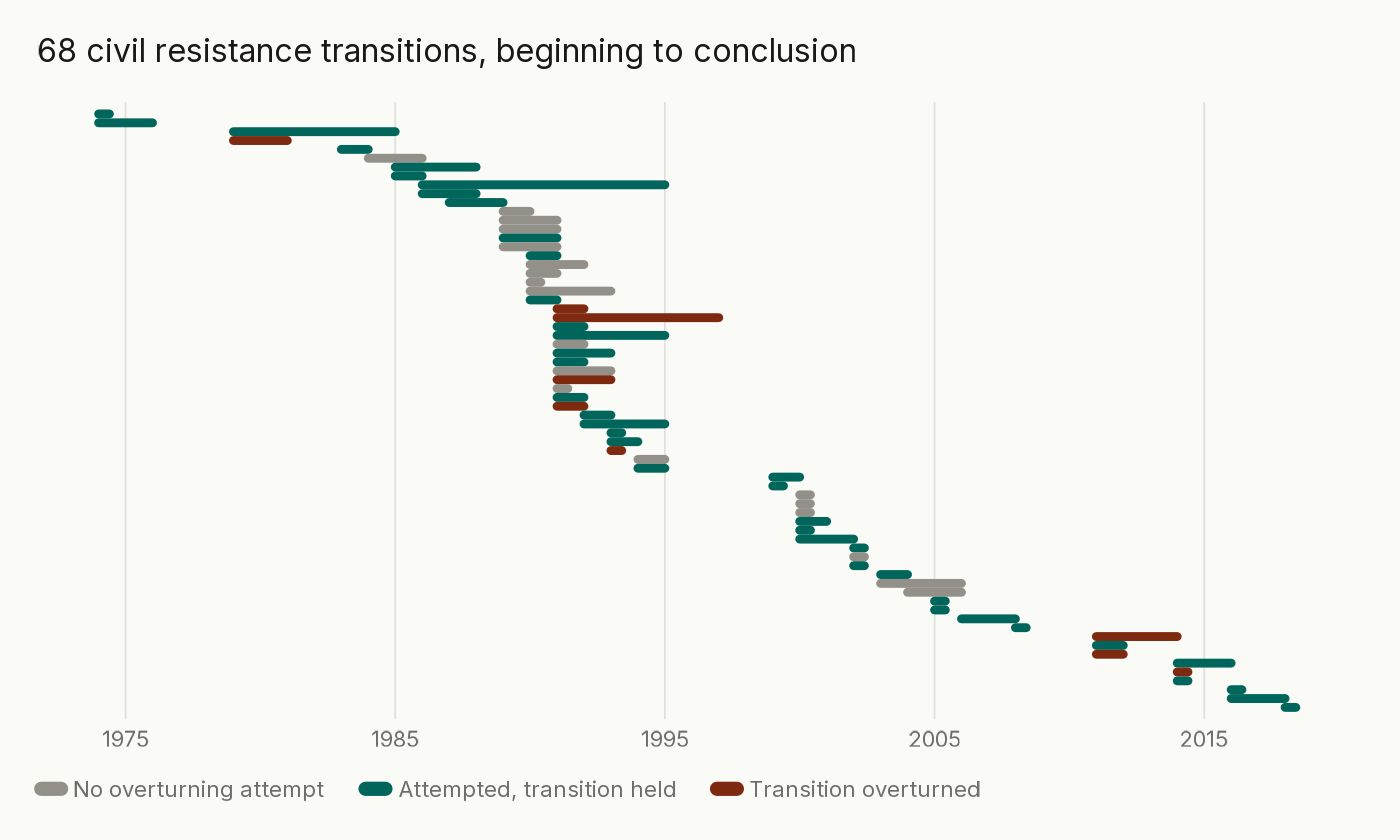
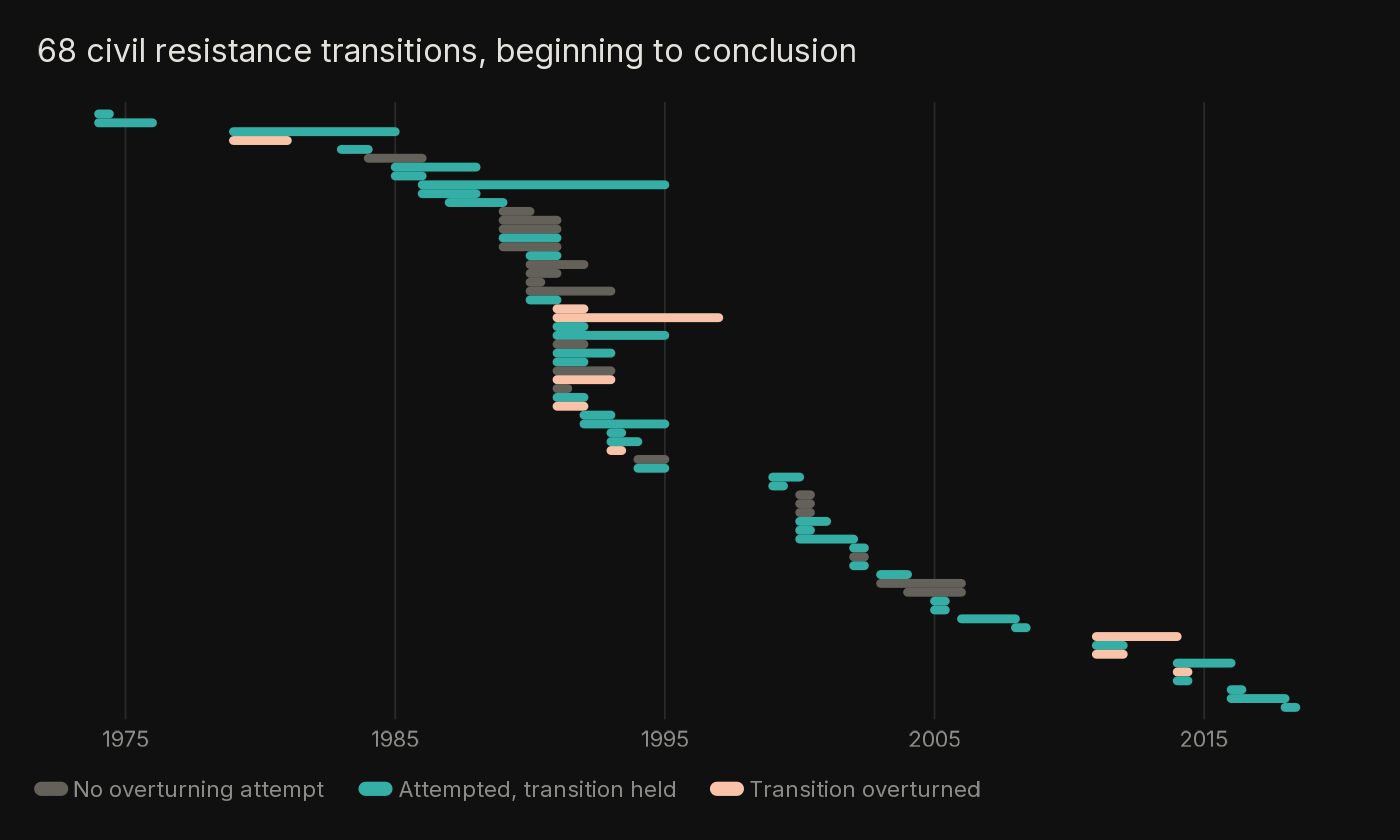
Timeline with 68 horizontal lines, one per civil resistance transition, ordered by onset year and coloured by whether the transition was attacked and whether it fell. Timeline with 68 horizontal lines, one per civil resistance transition, ordered by onset year and coloured by whether the transition was attacked and whether it fell.
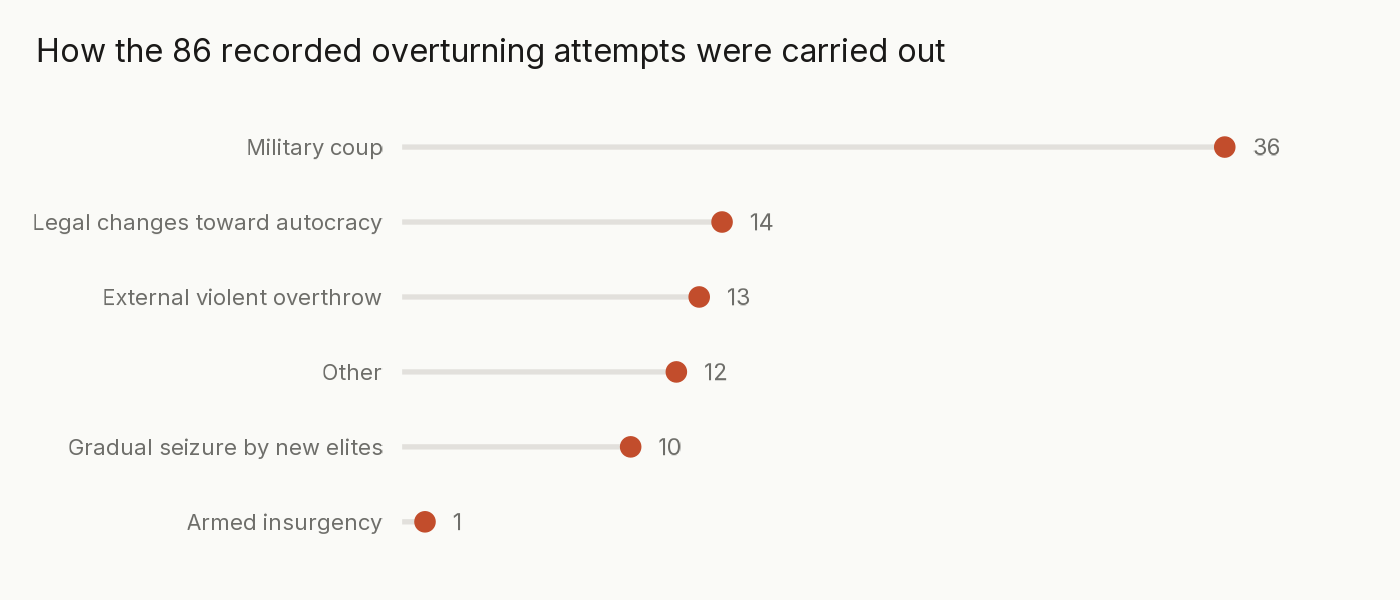
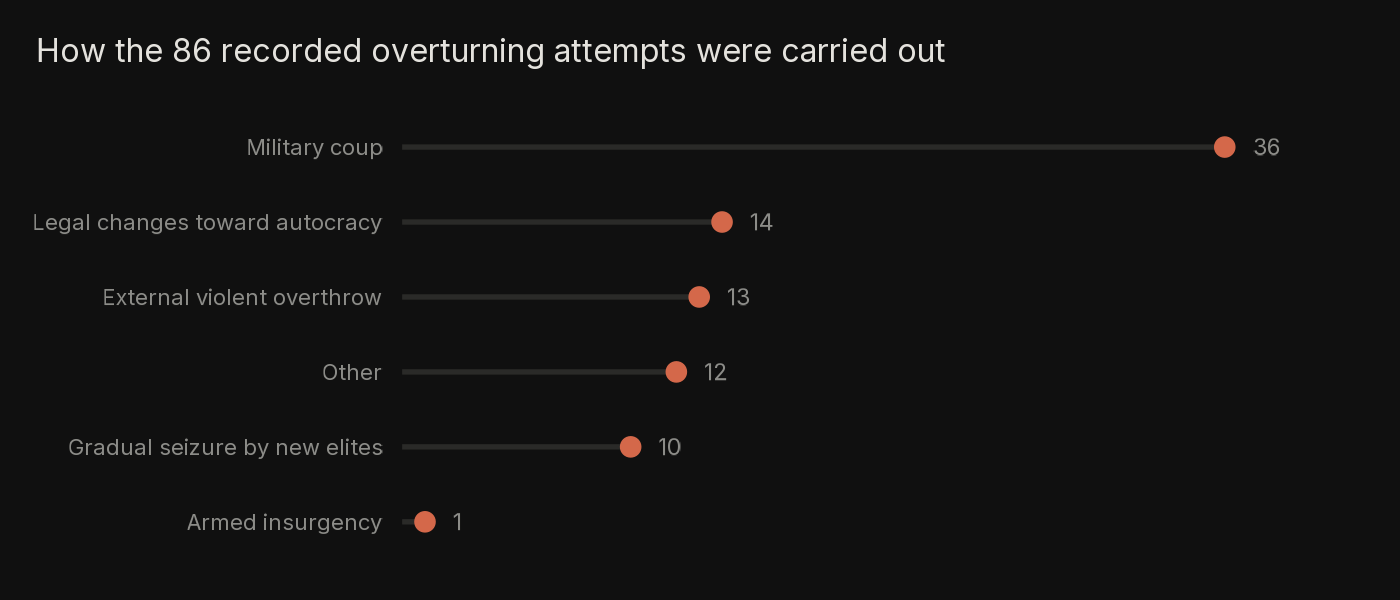
Dot plot of 86 overturning attempts by mechanism: 36 military coups, then legal changes, external overthrow, other, gradual seizure, and one armed insurgency. Dot plot of 86 overturning attempts by mechanism: 36 military coups, then legal changes, external overthrow, other, gradual seizure, and one armed insurgency.
The nine reversals
Country Transition How it fell
Iran 1979–1981 Legal changes toward autocracy
Niger 1991–1993 Military coup
Albania 1991–1992 Gradual seizure by new elites
Zambia 1991–1992 Gradual seizure by new elites
Belarus 1991–1997 Legal changes toward autocracy
Nigeria 1993 Military coup
Egypt 2011–2014 Military coup
Yemen 2011–2012 External violent overthrow
Thailand 2014 Military coup

Identifying Overturning Organizations in Civil Resistance Transitions

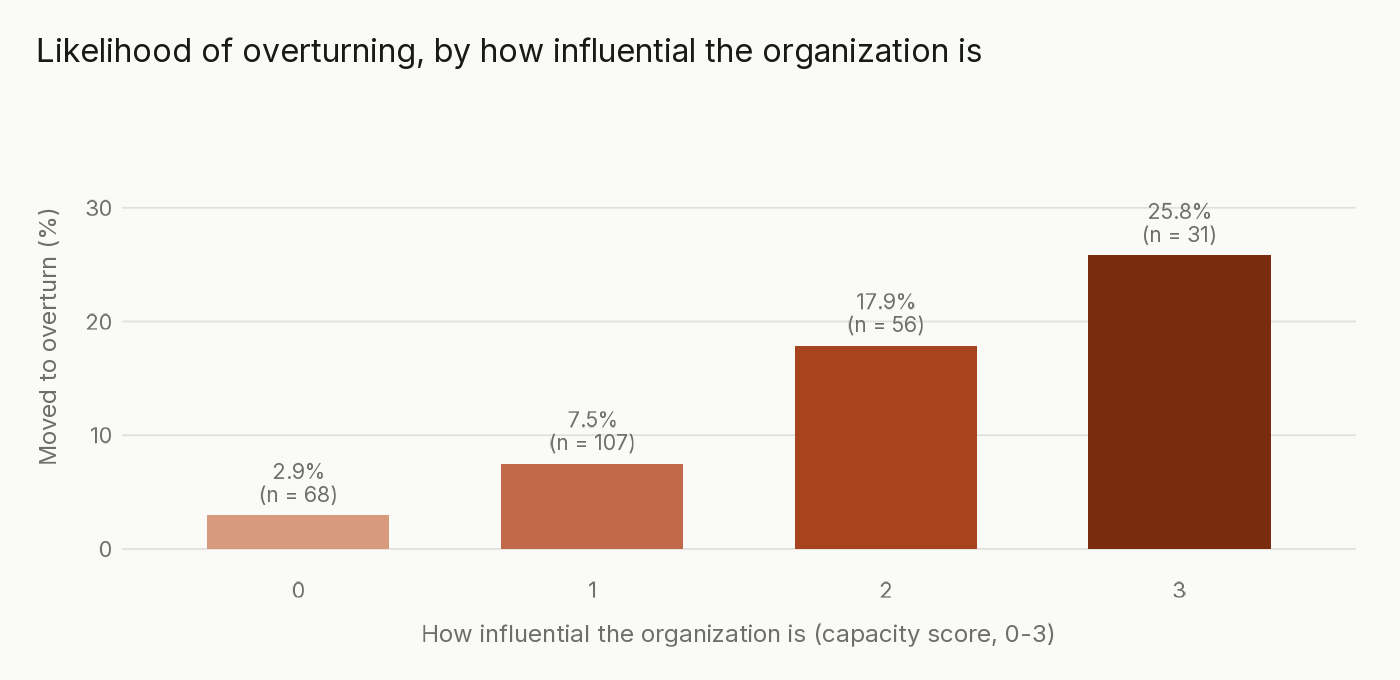
A continuation of the ROAD project, where we collected further data on the specific organizations involved in each campaign. Every organization is traced into the transition that followed and coded on what it is, how big it is, its ideology, whether it led the campaign, what office it took afterward, and how close it had been to the regime that fell. 303 organizations, 54 transitions, 48 countries.

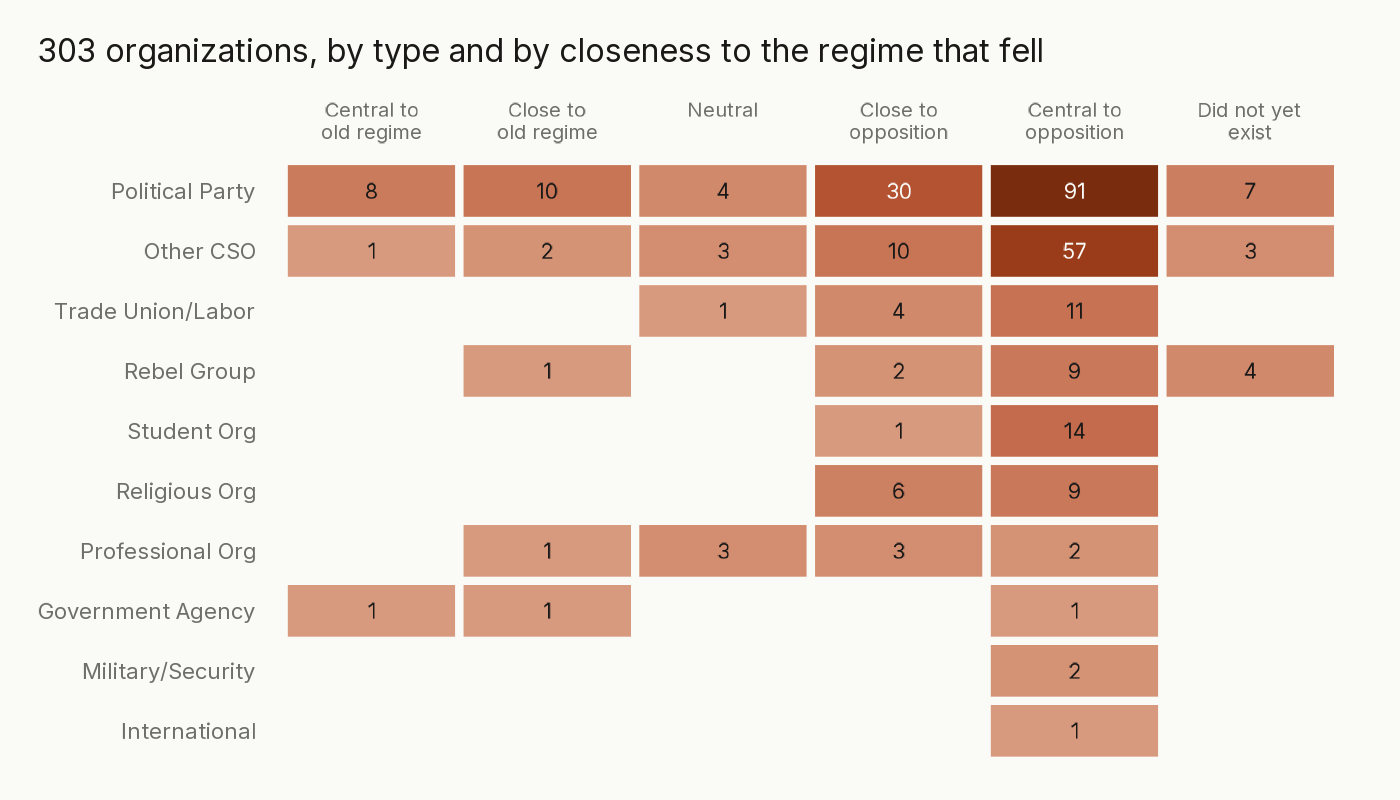
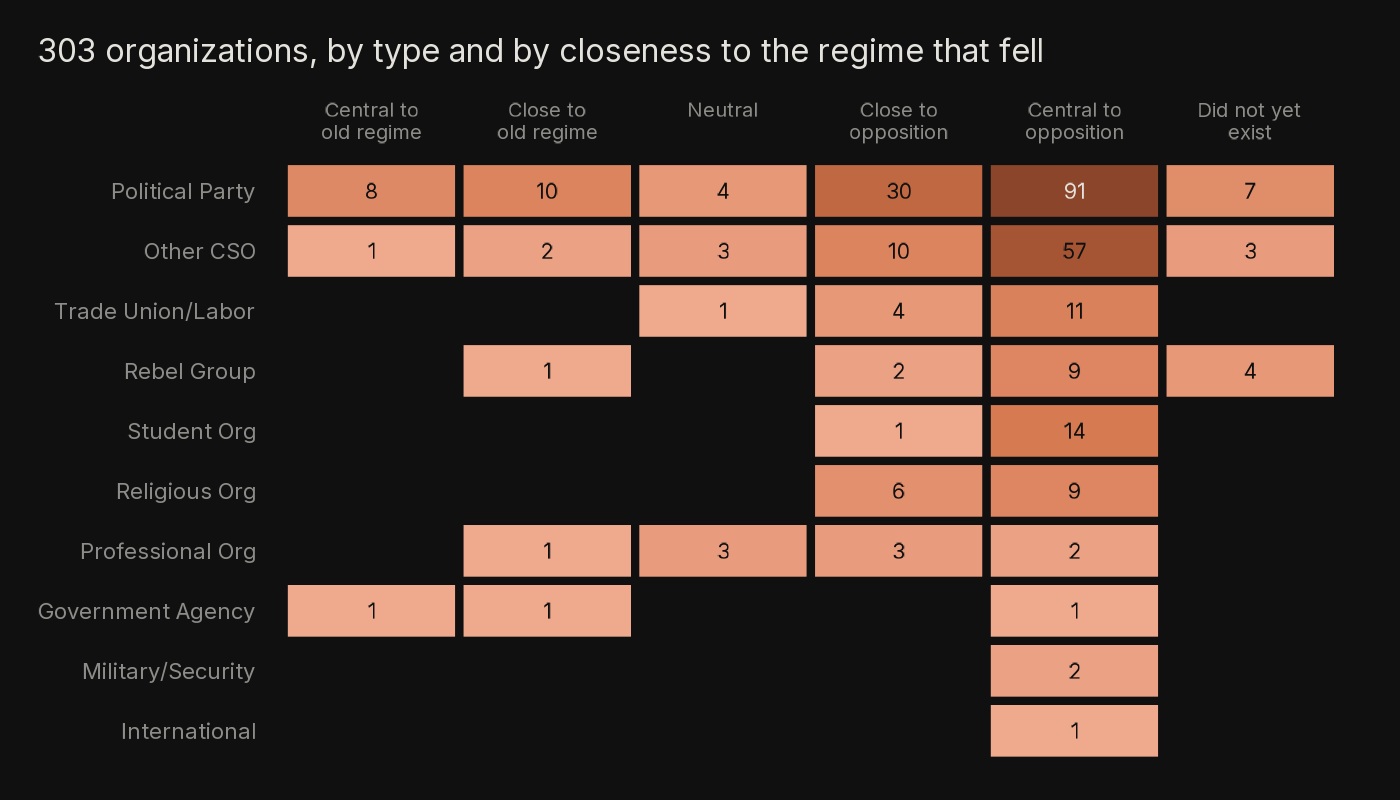
Matrix of organization type against relationship to the fallen regime; 91 political parties and 57 civil society organizations were central to the opposition, while cells near the old regime are nearly empty. Matrix of organization type against relationship to the fallen regime; 91 political parties and 57 civil society organizations were central to the opposition, while cells near the old regime are nearly empty.
Bar chart of the share of organizations that moved to overturn the transition, by capacity score from zero to three: 2.9 percent, 7.5 percent, 17.9 percent, and 25.8 percent. Bar chart of the share of organizations that moved to overturn the transition, by capacity score from zero to three: 2.9 percent, 7.5 percent, 17.9 percent, and 25.8 percent.

The Interest in BRICS Accession Dataset

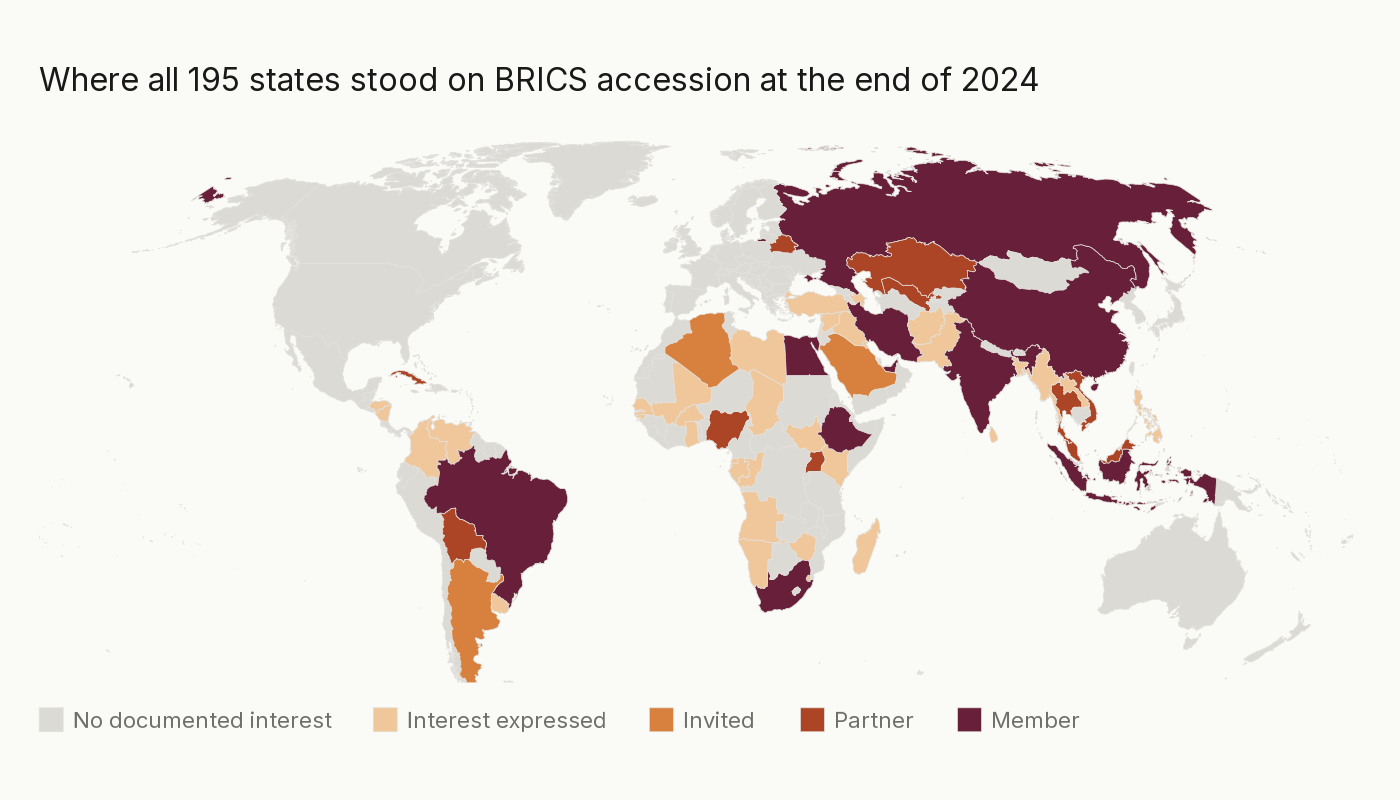
In the context of the last waves of participation in the BRICS, we systematically coded every country in the world for whether it officially expressed interest in the group and when. Interest counts only on a statement by a head of state, foreign minister, or designated spokesperson, or when the bloc itself names the country. 195 states, 60 of them interested, through the end of 2024.

World map shading each state by BRICS status at the end of 2024: no documented interest, interest expressed, invited, partner, or member. World map shading each state by BRICS status at the end of 2024: no documented interest, interest expressed, invited, partner, or member.
The 60 interested states, by tier
Tier N States
Member 10 Brazil, China, Egypt, Ethiopia, India, Indonesia, Iran, Russia, South Africa, United Arab Emirates
Partner 10 Belarus, Bolivia, Cuba, Kazakhstan, Malaysia, Nigeria, Thailand, Uganda, Uzbekistan, Vietnam
Invited 3 Algeria, Argentina, Saudi Arabia
Interest only 37 Afghanistan, Angola, Azerbaijan, Bahrain, Bangladesh, Burkina Faso, Chad, Colombia, Republic of the Congo, Equatorial Guinea, Gabon, The Gambia, Ghana, Guinea-Bissau, Honduras, Iraq, Kenya, Kuwait, Laos, Libya, Madagascar, Mali, Myanmar, Namibia, Nicaragua, Pakistan, Palestine, Philippines, Senegal, South Sudan, Sri Lanka, Eswatini, Syria, Türkiye, Uruguay, Venezuela, Zimbabwe
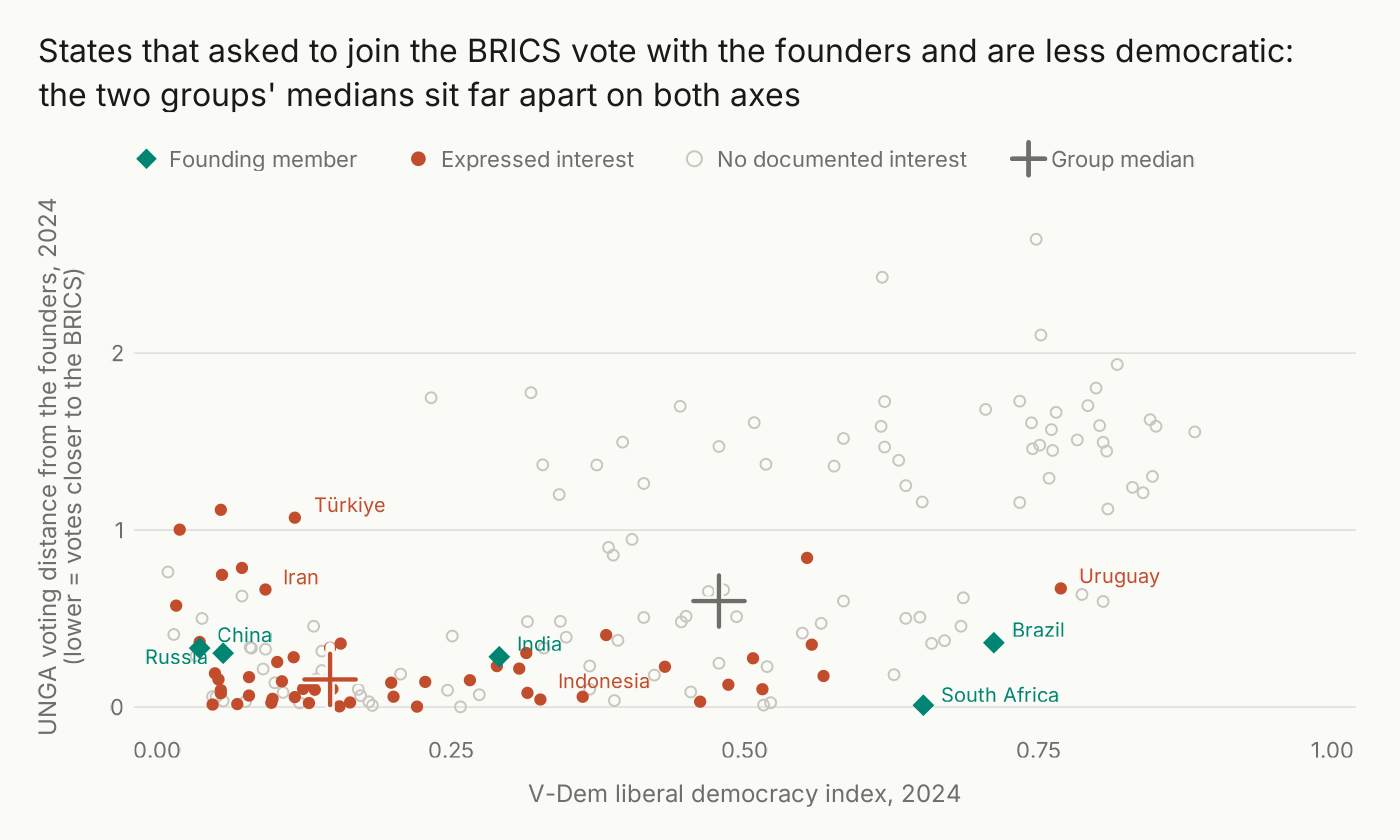
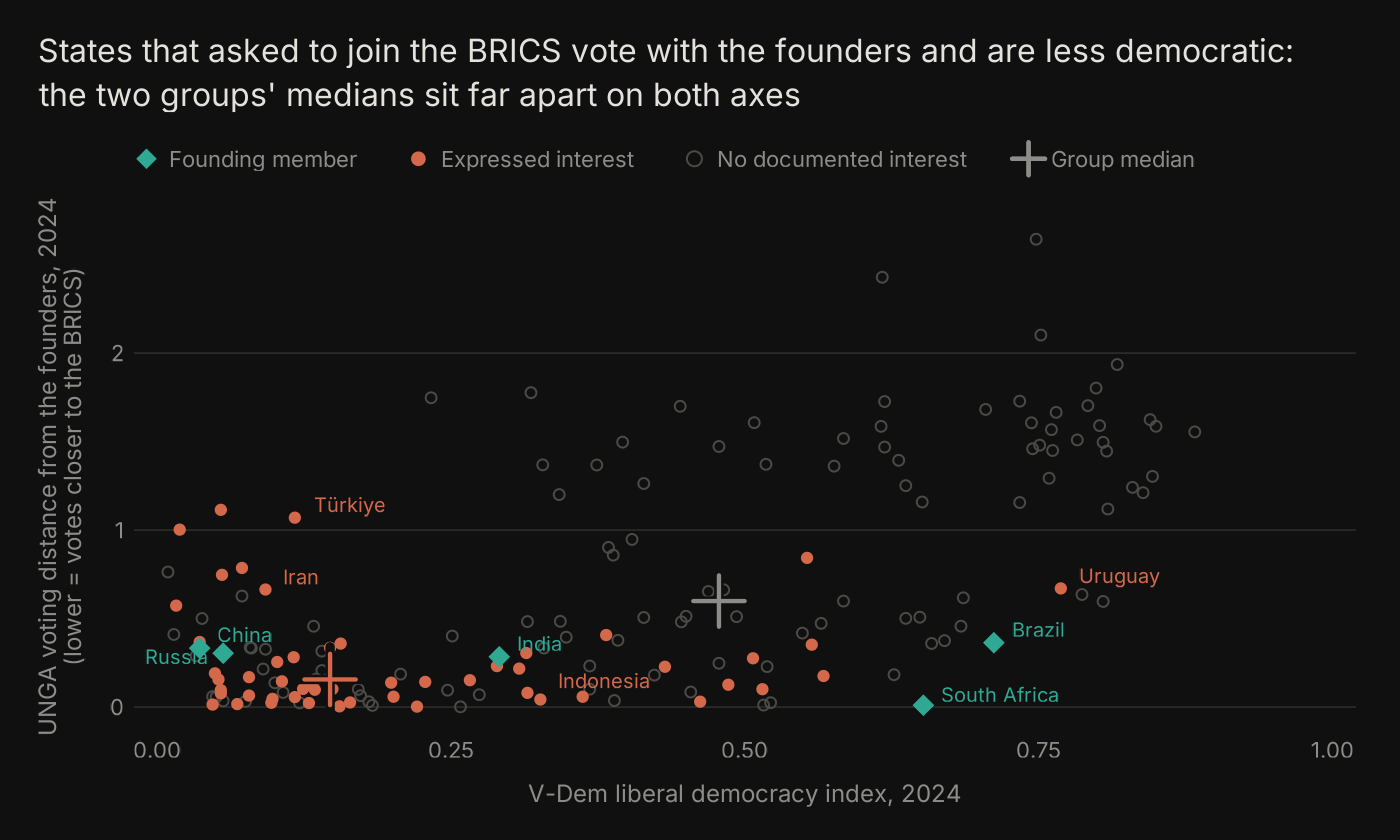
Scatter of V-Dem liberal democracy against UNGA voting distance from the BRICS founders in 2024, with a median cross per group: states that expressed interest have a median democracy score of 0.15 and a median voting distance of 0.16, against 0.48 and 0.60 for states with no documented interest. Labelled states are the founders (China, Russia, India, Brazil, South Africa), the 2024 entrants Indonesia and Iran, and the two outliers on the interested side, Türkiye and Uruguay. Scatter of V-Dem liberal democracy against UNGA voting distance from the BRICS founders in 2024, with a median cross per group: states that expressed interest have a median democracy score of 0.15 and a median voting distance of 0.16, against 0.48 and 0.60 for states with no documented interest. Labelled states are the founders (China, Russia, India, Brazil, South Africa), the 2024 entrants Indonesia and Iran, and the two outliers on the interested side, Türkiye and Uruguay.

From Loyalty to Exit: Why Regime Support Groups Defect during Civil Resistance

An ongoing project on defections from the ruling coalition. Fourteen support groups are tracked year by year across authoritarian and backsliding regimes, each coded for how unified its support is and how intense its loyalty. The two views below are a window into what we did; the data will be able to show far more. This is still a WIP, stay tuned for updates!

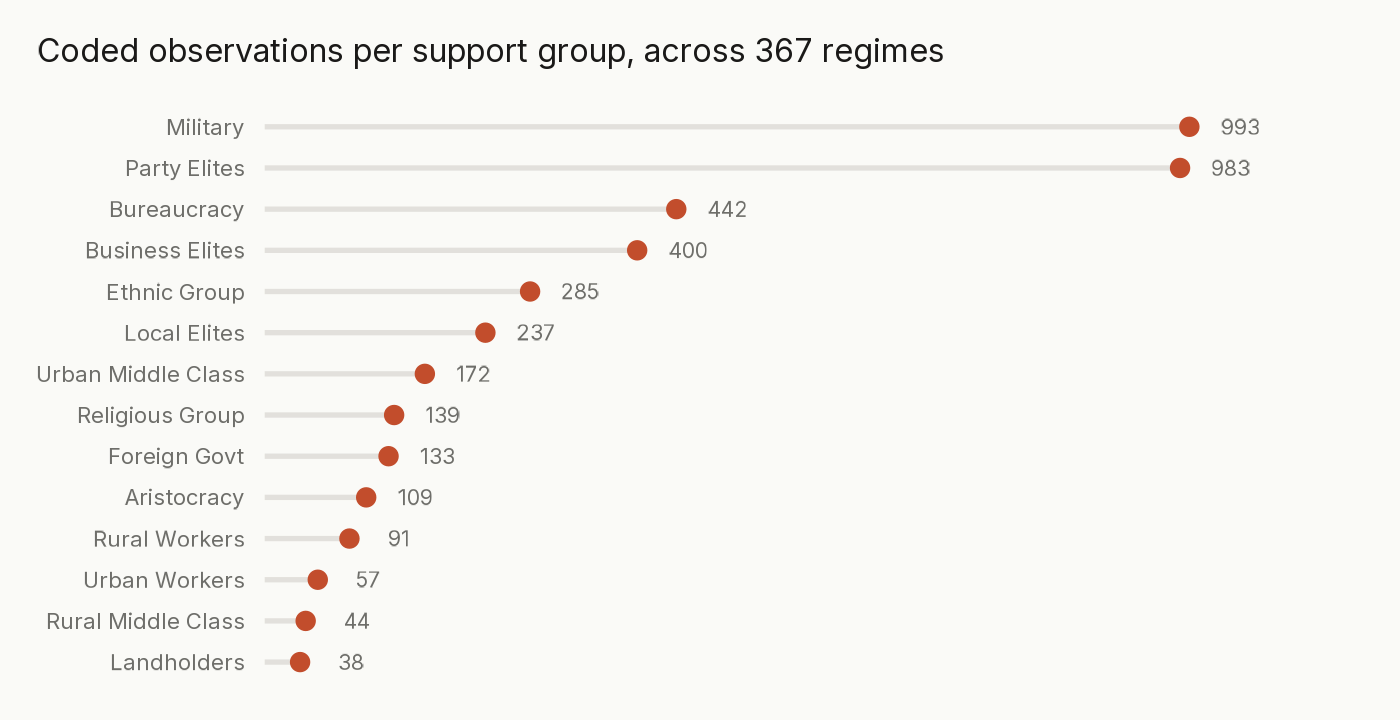
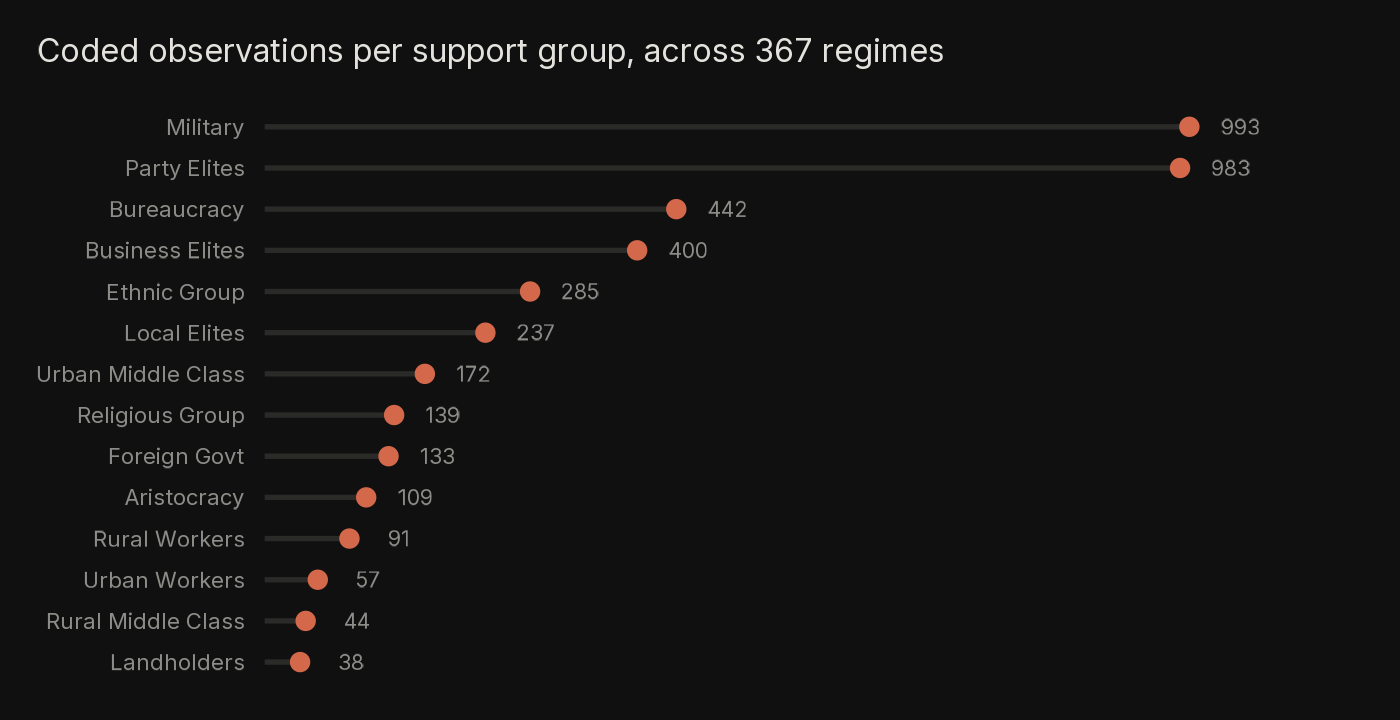
Dot plot of coded observations across fourteen regime support groups, led by the military at 993 and party elites at 983. Dot plot of coded observations across fourteen regime support groups, led by the military at 993 and party elites at 983.
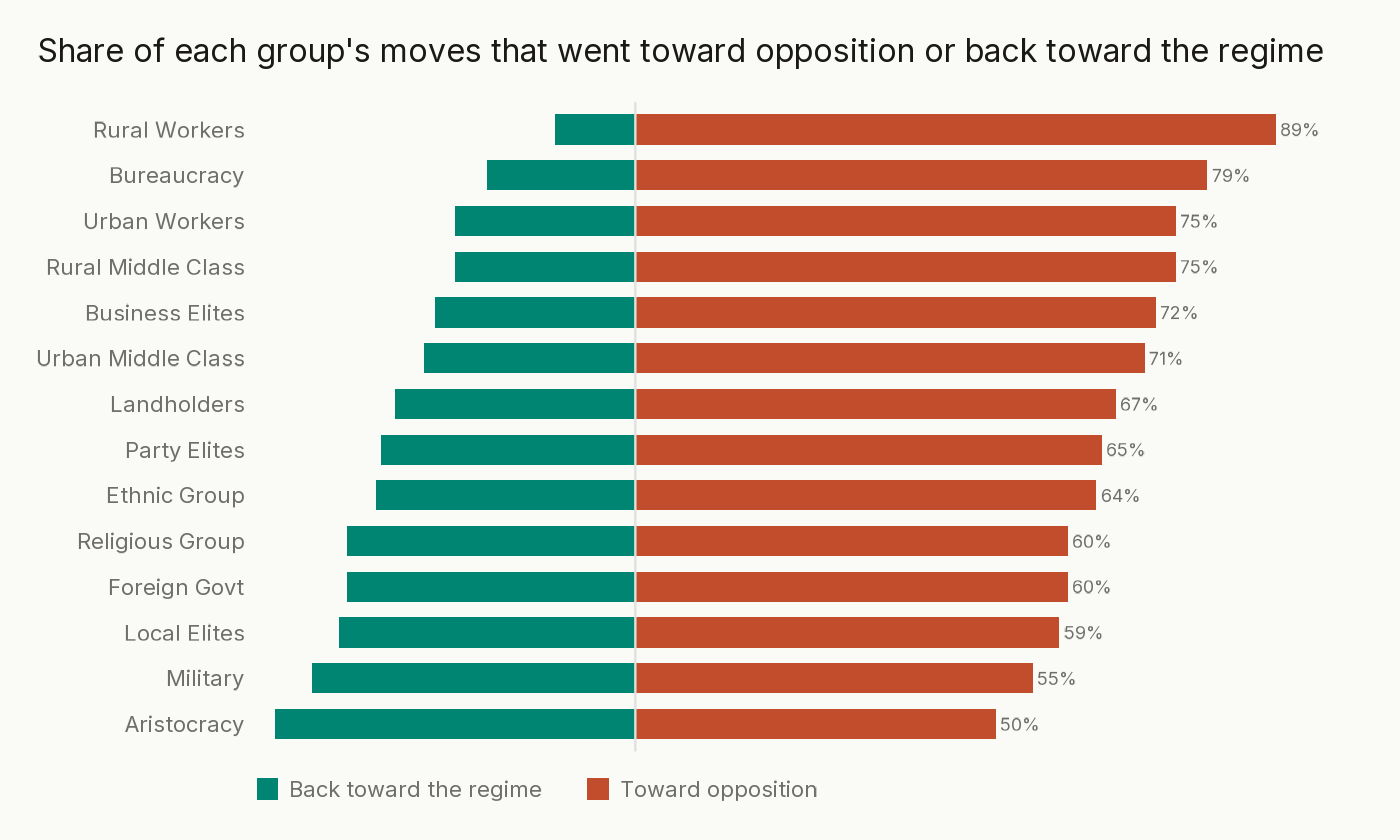
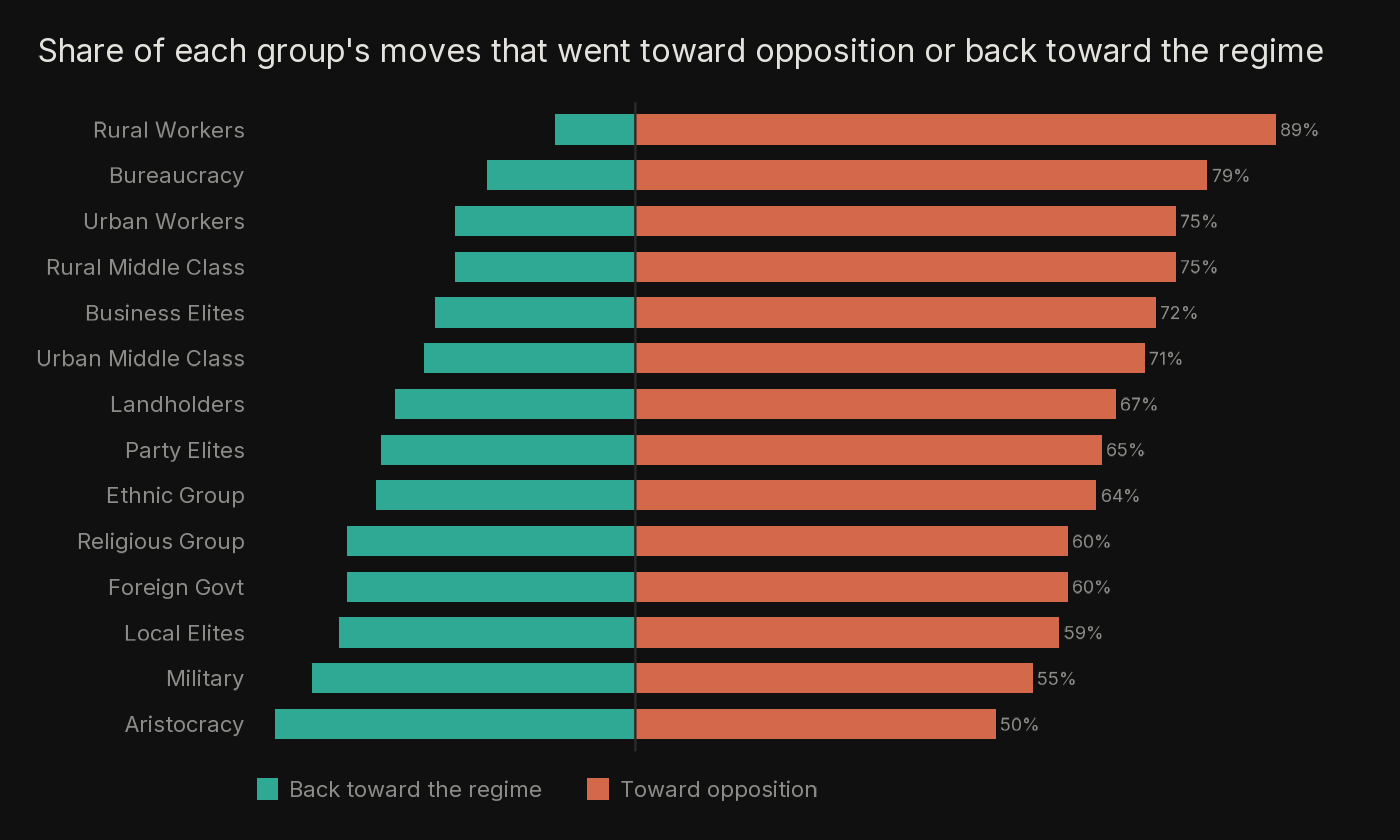
Diverging bars per support group type showing the share of loyalty moves that went toward opposition versus back toward the regime. Diverging bars per support group type showing the share of loyalty moves that went toward opposition versus back toward the regime.